

What looks like harmless bumps on your magnolia’s branches could be a sign of a much bigger problem taking root.
One of the biggest threats to ornamental magnolia trees is magnolia scale (Neolecanium cornuparvum), a large and often conspicuous soft scale insect.
Magnolia scale was once a common problem for magnolia trees in Ohio, but it became rare in the 2000s, with only a few localized outbreaks. Unfortunately, this pest is making a comeback, and local homeowners are once again seeking effective magnolia scale treatment.
If you have magnolia trees on your property, a heavy infestation can weaken them, cause unsightly sooty mold, and even lead to branch dieback if left unchecked. The good news? With early detection and the right treatment, your magnolias can stay healthy, vibrant, and beautiful for years to come.
What Is Magnolia Scale?
Magnolia scale is a type of soft scale insect that infests magnolia trees. It’s among the largest soft scale species and causes damage by sucking sap from the tree. This results in weakened branches, sparse foliage, and the development of sooty mold.
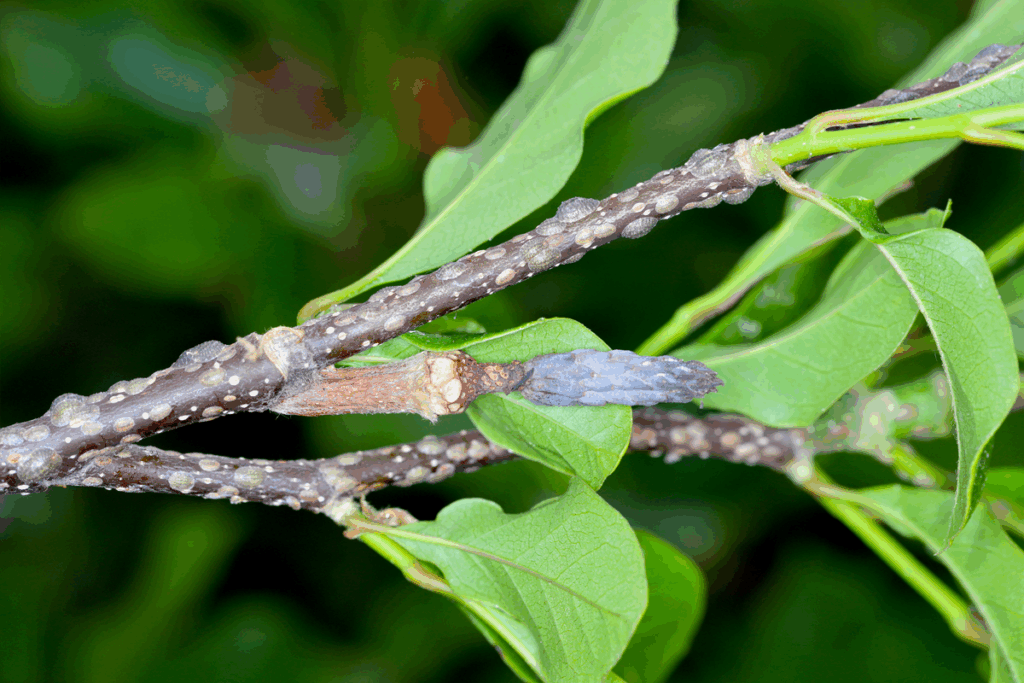
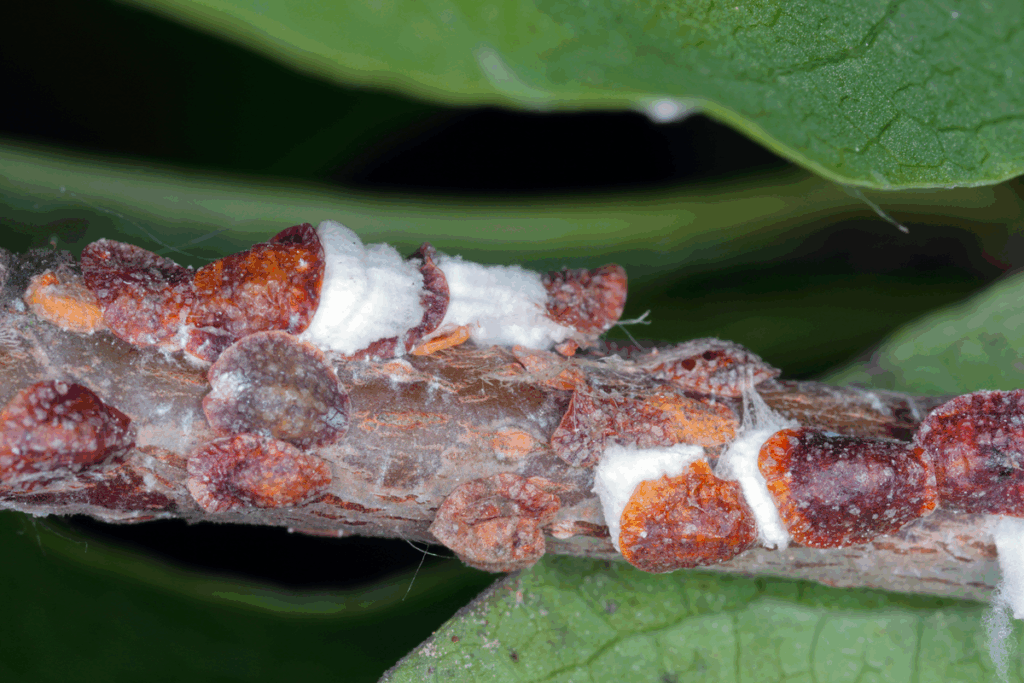
If you’ve noticed grayish-brown, swollen bumps or blobs stuck along your magnolia’s branches, you may have a magnolia scale problem. You may observe oozing sticky honeydew that leads to black sooty mold. It’s important to note, however, that an insect’s appearance can change depending on sex and life stage.
- Immature “crawlers” are tiny, oval, and mobile right after hatching.
- Adult females are immobile, look like brownish-white bumps, and blend in with the bark.
- Adult males are small, pink, and gnat-like; they fly briefly to mate, then die.
What Is the Life Cycle of Magnolia Scale?
Magnolia scale typically has a one-year life cycle. Understanding this cycle helps determine the best time to spray for magnolia scale or apply other treatments.
- Overwintering: Scales overwinter as first instar nymphs on stems, resembling lenticels.
- Egg Hatch / Crawler Stage: Eggs hatch into crawlers from early August through September. This is the key window for management.
- Feeding Stage: Crawlers settle and pierce twigs to suck sap. They mature by mid-summer the following year.
- Reproduction: Adults mate and lay eggs, starting the next cycle.
Timing is everything. While a single well-timed magnolia scale treatment can make a significant impact, repeating treatments during vulnerable stages each year helps prevent infestations from returning. This approach provides long-term protection while avoiding the need for aggressive or excessive intervention.
Knowing the crawler stage is crucial for timing horticultural oil for scale insects, as treatments are most effective before the protective coating develops.
What Are the Signs and Symptoms of an Infestation?
Early detection makes control easier. Watch for these warning signs:
- Honeydew and sooty mold: As they feed, scales excrete honeydew, leading to sticky surfaces and black mold on leaves, branches, and anything beneath the tree.
- Yellowing leaves and defoliation: Heavy infestations rob nutrients, causing leaf drop.
- Branch dieback: Severe infestations can girdle twigs, leading to dieback beyond the feeding area.
In the early stages, you might spot small, flat, oval crawlers or subtle brownish bumps on twigs. While these can be difficult to distinguish from natural bark texture, a close inspection can reveal slight movement or a waxy appearance that hints at active scale. Learning to recognize these subtle differences is key to early detection and successful management. A certified arborist can help.
When to Call a Certified Arborist
Even with good care, infestations can exceed what DIY treatments can manage. You should contact a certified arborist at the first signs of scale. Magnolia scale is primarily host-specific, so it doesn’t readily jump to unrelated species. However, stressed plants of all types are more vulnerable to pests in general. By reducing stress across your landscape and mixing magnolias with scale-resistant species, you not only protect individual trees but stabilize your entire planting environment.
Knowing when to prune magnolia tree for scale insects, typically late winter before growth begins, makes future infestations easier to prevent.
Protect Your Magnolias
Magnolia scale may look harmless at first, but left unchecked, it can cause serious damage. With regular monitoring, thoughtful care, and well-timed treatment, you can protect your magnolia trees for years to come.
If you’re unsure about next steps or need help with treatment timing, contact the experts at Ahlum & Arbor to schedule a consultation.